Reading Through It — Why Certain Stories Stay

Some stories don’t leave when the book closes.

They linger — not because they were shocking or dramatic, but because they touched something familiar.

When that happens, I know the story wasn’t just entertainment. It was a mirror. It reflected parts of me I may not talk about openly — the hunger for understanding, the pull toward intensity, the desire to feel deeply in a world that often asks for restraint.

I don’t read these stories to glorify darkness.

I read them to understand it. To explore it safely. To name the emotions without having to live them out loud.

Healing doesn’t mean avoiding the shadows.

It means knowing why they call to you.

Healing Between Chapters — The Difference Between Escaping and Resting

People often confuse reading with escape.

But escape feels frantic. Rest feels grounded. And when I read now, it’s not about disappearing — it’s about settling. My thoughts slow. My breathing evens out. The noise fades without me forcing it.

That’s not avoidance.

That’s regulation.

Healing has taught me that rest doesn’t need to be earned. It doesn’t need to be productive. It simply needs to be allowed. And books have become one of the safest places for me to practice that.

Sometimes the healthiest thing I can do

is close the world for a chapter or two.

Healing Between Chapters — Why I Read What I Read

I don’t choose books randomly.

I gravitate toward stories that reflect where I am emotionally — or where I’m heading.

When I’m drawn to darker narratives, it’s not because I’m broken. It’s because I’m curious. Because I want to understand power, resilience, survival, and desire in controlled environments. Fiction lets me explore intensity without being consumed by it.

There is healing in seeing difficult themes handled with intention. In recognizing yourself in flawed characters. In realizing you’re not alone in the questions you carry.

Reading doesn’t define me.

It helps me define myself.

“You don’t have to be healed to be worthy.”

If you had a freeway billboard, what would it say?

If I had a freeway billboard, it wouldn’t be loud.

It wouldn’t try to sell anything.

It would simply say:

“You don’t have to be healed to be worthy.”

Because so many of us are moving through life carrying invisible weight — showing up for work, for family, for others — while quietly wondering if we’re allowed to take up space exactly as we are. Still learning. Still unraveling. Still healing.

That billboard would be for the ones who feel behind.

For the ones who think rest is something they have to earn.

For the ones who learned survival before softness and are only now discovering that gentleness can exist without danger.

And maybe, just for a moment while passing by, someone would read it and exhale — realizing they don’t need to fix themselves before they’re allowed to exist fully in this world.

Healing Between Chapters — Reading the Parts of Myself I Don’t Talk About

There are parts of me I don’t explain easily.

The darker curiosities. The complicated emotions. The desire to explore things safely through fiction before I ever try to name them in real life.

Books give me that space.

Through characters, I can sit with power, fear, longing, and vulnerability without having to justify it. I can observe instead of participate. I can feel without being exposed. And in that process, I learn more about where my boundaries actually live.

Healing doesn’t mean erasing the darker parts of yourself.

Sometimes it means understanding them well enough not to be controlled by them.

Healing Between Chapters — What Stories Wake Up

Some books don’t just entertain me — they wake things up.

A line lands too close. A character mirrors something I thought I had already outgrown. And suddenly I’m aware of emotions I hadn’t named yet. Reading does that to me. It bypasses the defenses I’ve built and speaks directly to the places that are still tender.

I’ve learned not to rush past that feeling. When something stirs, it’s usually because it has something to teach me. Not about the story — about myself. About what I’m still carrying. About what I’m finally ready to release.

Books don’t create wounds.

They reveal the ones that are ready to heal.

Healing Between Chapters — You’re Allowed to Take Your Time

There is no deadline on becoming who you’re meant to be.

I remind myself of this every time I catch that familiar urge to rush — to finish healing, to move on, to be “past” things I’m still gently working through. Books have taught me patience in ways nothing else has. Stories unfold at their own pace. So do people.

Some chapters are meant to be lingered in. Others are meant to be closed quietly, without ceremony. Both are valid. Both matter.

Healing isn’t linear, and it isn’t urgent.

It’s layered, slow, and deeply personal.

And I’m allowed to take my time.

Healing Between Chapters — Reading as a Boundary

I’ve started noticing that reading has become one of my healthiest boundaries.

When I open a book, I’m choosing where my attention goes. I’m stepping away from conversations that drain me, expectations that aren’t mine, and the constant pull to be available to everything and everyone.

This isn’t withdrawal. It’s discernment.

Healing has taught me that boundaries don’t always look like confrontation. Sometimes they look like silence. Like choosing to turn a page instead of engaging. Like allowing myself to be unreachable for a little while so I can come back steadier.

Reading doesn’t numb me.

It centers me.

And that, too, is healing.

Living Between the Past and the Future

Do you spend more time thinking about the future or the past? Why?

I used to live almost entirely in the past.

Not because I wanted to stay there, but because it shaped how I learned to survive. The past taught me patterns, warning signs, and ways to protect myself when things felt uncertain or unsafe. For a long time, looking back felt like the only way to stay grounded.

Lately, though, I’ve noticed a quiet shift.

I still carry the past with me — I don’t believe healing means forgetting — but it no longer holds all of my attention. Instead, I find myself thinking about the future in smaller, gentler ways. Not in rigid plans or expectations, but in possibilities. In what might feel safe. In what could be steady.

The future doesn’t scare me the way it once did.

And the past doesn’t control me the way it used to.

I think I live somewhere in between now — honoring where I’ve been, while slowly allowing myself to imagine where I’m going. And for the first time, that middle space feels like growth.

Healing Between Chapters — The Quiet After Intensity

After intensity — emotional, relational, or internal — there is always a quiet.

I used to fear that quiet, mistaking it for emptiness or loss of momentum.

Now I understand it differently.

The quiet is where things settle. It’s where the lessons sink beneath the surface instead of staying sharp and loud. When I read after a heavy day, I’m not escaping. I’m letting my system recalibrate, allowing my thoughts to soften instead of spiral.

There’s a strange comfort in knowing that growth doesn’t always announce itself. Sometimes it whispers. Sometimes it hides inside stillness, waiting for me to stop pushing long enough to notice it’s already happening.

This space — between chapters, between emotions — is not nothing.

It’s integration.

Healing Between Chapters — When Rest Is Still Work

Some days, healing doesn’t look like breakthroughs or revelations.

It looks like sitting with a book open on your chest, reading the same paragraph twice, and letting your nervous system finally unclench.

I used to believe healing required effort — journaling until my hand cramped, digging through memories until something shifted. And sometimes that’s true. But lately, I’ve learned that rest can be just as intentional. That choosing to pause isn’t avoidance. It’s regulation.

There is something grounding about reading between responsibilities, between emotions, between versions of myself. A reminder that I don’t need to fix anything today. I can simply exist, absorb words written by someone else, and let my body catch up to where my mind already is.

Healing doesn’t always need language.

Sometimes it just needs permission to slow down.

Healing Between Chapters

Some days, healing doesn’t come from writing it all out.

It comes from sitting quietly with a story that knows how to hold the weight for you.

Lately, I’ve been reading more than I’ve been explaining myself.

Letting someone else’s words carry me through feelings I don’t yet have language for.

Finding rest in the space between chapters — where nothing is demanded, and everything is allowed to settle.

Books have always been a place I return to when my thoughts feel crowded.

They don’t rush me.

They don’t ask me to be clearer than I am.

They just stay.

Healing doesn’t always look like breakthroughs.

Sometimes it looks like turning a page slowly.

Breathing.

Letting the story do what it does best.

And trusting that, for now, this is enough.

Still Showing Up

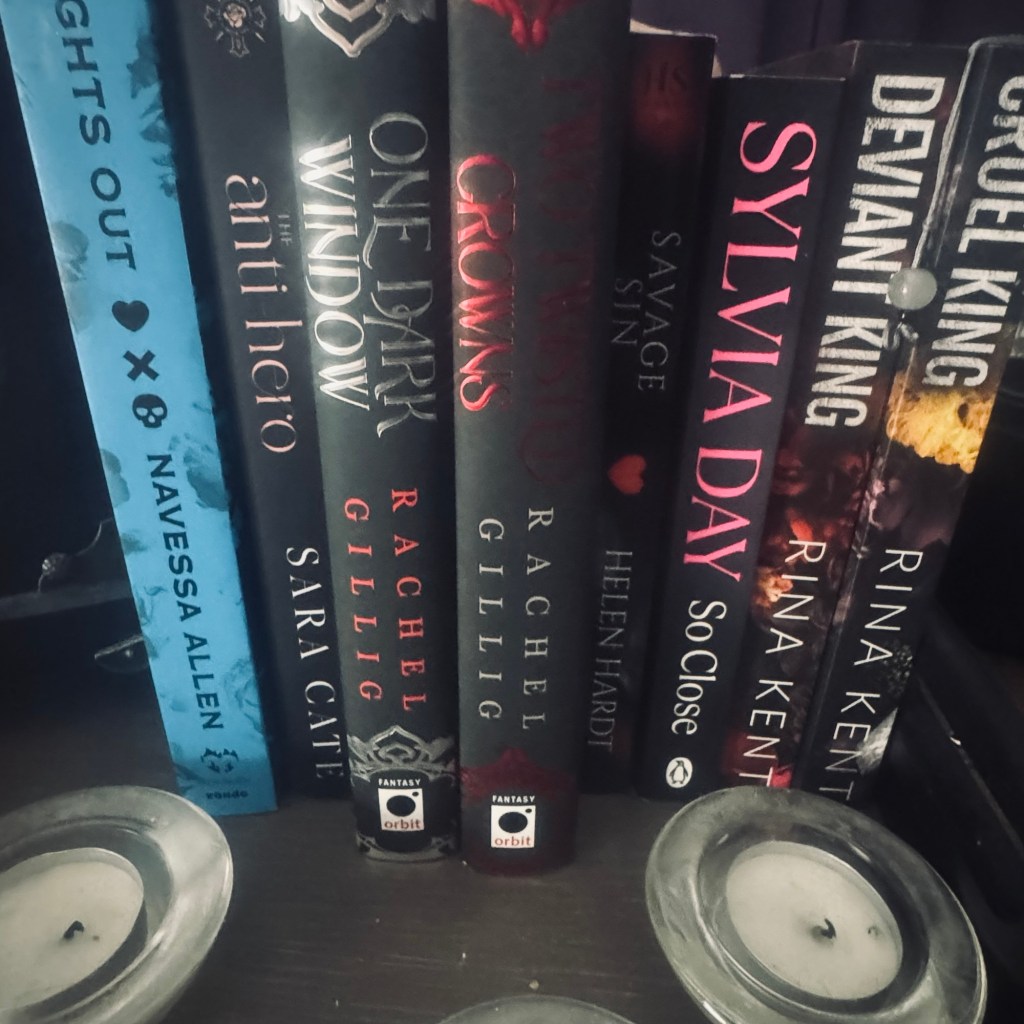
Lately, my blog has been quieter in words and louder in images.

Stacks of books.

Spines worn soft from rereading.

Stories that have held me when I didn’t have the language to explain myself.

And I realized something important today:

That still counts.

There are seasons when writing pours out of me, and seasons when reading does the heavy lifting instead. When my healing doesn’t look like reflection paragraphs, but like sitting still with a book that understands something I haven’t named yet.

Books have always been a part of how I process.

How I regulate.

How I survive long stretches of silence inside myself.

So if you’ve noticed more images than essays lately, know this — I’m still here. Still showing up. Still choosing words, even when they belong to someone else for a while.

Healing doesn’t disappear just because it changes shape.

Sometimes it looks like reading one more chapter instead of forcing yourself to explain everything.

And sometimes, that’s enough.

The greatest gift someone could give me is safety without control.

What is the greatest gift someone could give you?

The kind of safety that doesn’t demand I be smaller, quieter, or easier to love.

The kind that lets me exist fully — messy, healing, growing — without punishment.

Time.

Patience.

Consistency.

Someone who stays even when I’m not at my best.

Someone who listens without trying to fix me.

Someone who understands that healing isn’t linear and doesn’t rush the process.

The greatest gift isn’t something wrapped.

It’s presence.

It’s being seen and still chosen.

And maybe most of all —

the freedom to be exactly who I am, without fear of losing love for it.

To the Girl Who Wrote This

I found my old words again.

Written by a girl who didn’t yet know she would survive.

She was honest before she was healed.

Brave before she was safe.

Soft in a world that didn’t protect her.

If I could speak to her now, I’d tell her this:

You weren’t weak.

You were learning.

And I carried you all the way here.

Soft Lights, Dark Longing

There’s something about winter that makes desire louder.

The quiet.

The darkness.

The way everything slows down.

Christmas doesn’t soften me — it sharpens what I feel.

Longing sits closer.

Touch feels heavier.

Memories linger longer than the lights on the tree.

This season isn’t just about warmth and comfort.

It’s about craving connection in the cold.

About wanting to be chosen, held, undone.

And maybe that’s the truth beneath the tinsel —

even in the darkest nights, we still reach for heat.

This Is the Feeling

Some books don’t leave you with thoughts —

they leave you with a feeling.

A tight chest.

A racing heart.

A silence afterward.

That’s the kind of story I’m drawn to lately.

Not the ones that entertain —

but the ones that stay.

Learning to Sit With Grief

Grief doesn’t always announce itself loudly.

Sometimes it arrives as exhaustion.

As detachment.

As longing for things you can’t quite name.

I’m learning that grief doesn’t need to be solved.

It needs space.

It’s okay to miss what was.

It’s okay to mourn who you were.

It’s okay to carry love and pain at the same time.

Healing doesn’t erase grief —

it teaches you how to live beside it.

Christmas Day — For Whoever You Are Today

Today is Christmas Day for some.

For others, it’s simply another day that happens to fall in December.

For some, it’s full of noise and tradition.

For others, it’s quiet — or heavy — or something to get through.

And all of that is allowed.

You don’t need to feel grateful if you’re tired.

You don’t need to feel joyful if you’re grieving.

You don’t need to perform celebration if today doesn’t hold meaning for you.

Today can be a pause.

A breath.

A moment to acknowledge where you are — without judging it.

This year asked a lot of us.

Some days we met it with strength.

Some days we met it with survival.

Both count.

If today brings warmth, I hope you let yourself feel it.

If today feels hollow, I hope you’re gentle with yourself.

If today is just another step forward, I hope you recognize the quiet courage in that.

Whether you celebrate Christmas or not,

whether today feels special or ordinary,

you belong in this moment exactly as you are.

There is no right way to move through today.

Just be where your feet are.

That is enough.

Christmas Eve — A Quiet Kind of Holding

Christmas Eve has never been about perfection for me.

It’s about stillness.

It’s the night where the noise softens — not because everything is healed or whole, but because the world finally allows itself to slow down.

The lights glow a little warmer.

Memories sit closer.

And emotions arrive without asking permission.

This is the night I think about what this year has asked of me.

What it took.

What it gave.

What it changed.

I think about the grief that didn’t leave, but learned how to sit beside me.

The strength I didn’t know I had, but used anyway.

The softness I protected instead of losing.

And if you don’t celebrate Christmas, this night can still be yours.

It can be a pause.

A breath.

A moment of reflection at the edge of the year.

You don’t need a holiday to rest.

You don’t need tradition to reflect.

You don’t need celebration to honor what you’ve carried.

Christmas Eve — or just another quiet night in December — reminds me that healing doesn’t need to be loud.

It doesn’t need closure or perfect answers.

Sometimes it just needs space —

space to acknowledge what was hard,

space to honor what survived,

space to rest in what still remains.

Tonight, I’m not asking for miracles.

I’m grateful for the quiet ones already here:

presence, breath, warmth, and the knowing that I made it through.

If you’re reading this tonight — whether you celebrate or not —

I hope you give yourself permission to pause.

To feel without fixing.

To hold both joy and ache without guilt.

Some nights aren’t meant to sparkle.

They’re meant to hold.

And that is enough.

The Characters Who See Me

There’s always that one character —

the one who feels too deeply, loves too fiercely, breaks too quietly.

The one everyone misunderstands.

I don’t read for perfection.

I read for recognition.

Because seeing my pain reflected in fiction reminds me that I was never alone in it.

Someone else survived this feeling.

Someone else found words for it.

And sometimes that’s enough to keep going.

1994 — The Year I Arrived

Share what you know about the year you were born.

I was born in 1994 —

a year before I understood what it meant to carry things quietly.

The world I entered was loud in some ways, and painfully silent in others.

People were moving forward, chasing progress, learning how to survive in a changing world —

and somehow, I learned how to survive too, long before I knew that was what I was doing.

I don’t remember 1994, but I remember what followed.

I remember learning how to read moods instead of maps.

How to sense shifts in energy before words were spoken.

How to grow up quickly when safety felt uncertain.

Being born in 1994 means I straddled two worlds —

old expectations and new freedoms,

spoken rules and unspoken wounds.

I didn’t have the language for trauma back then.

I didn’t know what healing was supposed to look like.

But something in me was already paying attention. Already adapting. Already enduring.

Now, years later, I understand that the year I was born didn’t define me —

but it shaped me.

And every year since has been about learning how to soften what hardened too early,

and reclaim the parts of myself that were never meant to carry so much.

Desire Was Never the Enemy

For a long time, I confused silence with safety.

I thought if I stayed small, stayed quiet, stayed numb — I would finally be okay.

But healing asked something different of me.

It asked me to feel again.

To listen to my body.

To stop apologizing for wanting more.

Desire isn’t recklessness.

It’s aliveness.

And reclaiming it wasn’t about another person —

it was about trusting myself again.

Reading What Heals, Not What’s Approved

I used to think the books I loved said something shameful about me.

That wanting darkness, obsession, intensity — meant something was wrong.

But the truth is, these stories meet parts of me that were never protected.

They sit with longing instead of dismissing it.

They let desire exist without apology.

Dark romance doesn’t teach me to want chaos —

it teaches me that my emotions were never “too much.”

They were simply never held.

Sometimes healing doesn’t come wrapped in softness.

Sometimes it comes sharp, honest, and raw.

And that’s okay.

Grief — Part III: What It Leaves Behind

Grief changes you — not always in ways that are visible.

It deepens your empathy.

It sharpens your awareness.

It teaches you how fragile and precious connection really is.

What remains after grief isn’t emptiness.

It’s tenderness.

Memory.

A quieter understanding of yourself and others.

Healing didn’t remove my grief.

It taught me how to hold it gently

without letting it define me.

And maybe that’s enough.

Grief — Part II: Learning to Live With It

I used to believe healing meant grief would eventually disappear.

I know now that healing looks more like learning how to live alongside it.

Some days, grief is quiet — barely noticeable.

Other days, it resurfaces without warning, heavy and familiar.

Healing hasn’t erased it.

Healing has softened my relationship with it.

I no longer ask grief to leave.

I ask it what it needs.

I let it exist without turning it into a failure or a setback.

There is strength in continuing forward

without denying what still hurts.

Grief — Part I: The Quiet Weight

Grief doesn’t always arrive loudly.

Sometimes it settles in slowly, without announcement.

It lives in the things we don’t talk about —

the relationships that ended without closure,

the versions of ourselves we had to outgrow to survive,

the childhoods that felt more like endurance than safety.

This kind of grief doesn’t demand attention.

It simply stays.

We carry it while making dinner,

while showing up for others,

while convincing ourselves we’re “fine.”

And maybe the hardest part is realizing

how long we’ve been holding it

without ever calling it what it is.

What Healing Has Been Teaching Me Lately

What skills or lessons have you learned recently?

Recently, I’ve learned that healing isn’t about fixing what’s broken — it’s about listening to what was never allowed to speak.

I’m learning how often I survived by silencing parts of myself: my needs, my anger, my softness, my voice. Now, instead of pushing those parts away, I’m sitting with them. Letting them be seen. Letting them take up space without shame.

I’ve learned that growth doesn’t always feel empowering. Sometimes it feels quiet, uncomfortable, even lonely — and that doesn’t mean I’m doing it wrong. It often means I’m unlearning patterns that once kept me safe, but no longer serve who I am becoming.

Most of all, I’m learning that healing doesn’t need to be rushed.

I’m allowed to move slowly.

I’m allowed to grieve who I was.

And I’m allowed to trust that who I’m becoming is worthy of patience, tenderness, and grace.

Music can become a tool of healing

Triggered by Chase Atlantic is one of the song s I listen to most especially when there’s so much happening around me and I need space to breathe. We all have that one song or play list that helps us through the hard and big emotions that lead us to heal into better versions of ourselves.

https://open.spotify.com/track/2Kzh82y13pTISM1EuUZNEQ?si=IKnb1N1UQWuXaGtW8FDP5w

Book of the day

Continue reading “Book of the day”

“A Letter to the Girl Who Felt Everything Too Deeply”

To the girl who cried over small things

because the big things were too heavy to touch—

To the girl who loved too quickly,

trusted too easily,

wrote paragraphs for boys who gave her sentences—

To the girl who walked through the world

with her heart unshielded

and her hopes unprotected—

I’m proud of you.

You felt everything fully

because you were never meant to live half-hearted.

Your intensity wasn’t a curse—

it was your honesty.

You weren’t “too much.”

You were alive

in ways the world wasn’t ready for yet.

And even though life eventually hardened you,

you didn’t lose that softness.

You just learned to guard it better.

Thank you for surviving.

Thank you for feeling.

Thank you for becoming.

I carry you with me—

every version,

every page,

every bruise,

every hope.

And I promise you this:

your story only gets brighter from here.

“The Poem I Wrote Before I Knew What Heartbreak Was”

I found an old piece of writing today—

a poem I wrote before I ever knew what it meant

to lose someone you weren’t ready to live without.

The lines were messy,

the handwriting tilted,

but the emotion was real.

I wrote about forever

like it was something you could promise

with a smile in a hallway

or a hand held a little too long.

I believed in love that stayed.

I believed in devotion that didn’t shake.

I believed every warm moment meant something.

Looking back,

I don’t judge myself for that innocence.

I mourn her a little—

the girl who thought forever was simple

because she hadn’t learned yet

that sometimes love doesn’t leave…

it just changes shape.

And maybe that’s what growing up really is—

not losing our softness,

but learning how to hold it

without letting the world break it.

“The Girl I Was Before the World Got Loud”

There was a time when life felt quieter.

Not easier—just quieter.

Back then, my emotions lived in the pages of a notebook

long before I learned how to speak them out loud.

I wrote about boys who made my heart trip,

friends who felt like home until they didn’t,

and wounds I didn’t know were wounds yet.

When I read those old pages now,

I don’t see “dramatic teenage poetry.”

I see a girl trying to understand a life that was too big for her.

I see someone who loved recklessly

because she didn’t know how to love any other way.

I see softness growing in a place

that didn’t always protect it.

I don’t want to forget her.

She’s the reason I survived.

She’s the reason I write.

She’s the first version of me

who didn’t give up.

And I’m finally learning to love her back.

“The Way He Said My Name Felt Like a Gift”

Some names sound different in winter.

Softer.

Sweeter.

More sinful.

He said mine like he’d been holding onto it for months.

Like it tasted like memory and want.

Like he finally let himself want me

the way he always pretended he didn’t.

The snow drifted around us,

soft and quiet,

but nothing about the moment felt gentle.

His gaze dragged over my face,

slow, intentional,

like he was trying to memorize the woman I’d become.

And maybe he was.

Maybe he finally saw

that I wasn’t the girl he used to know—

I was something bolder,

braver,

hungrier.

Or maybe he always knew

and just waited for me to admit it.

Either way…

the way he breathed my name

felt like a promise

I wasn’t ready to let go of yet.

“Under the Trees, He Found Me Again”

The Christmas lights above us flickered like they knew our secrets.

The world around us glittered,

bright and innocent—

but the air between us was anything but.

He stepped closer,

just close enough for the warmth of him to melt the cold off my skin.

My pulse tripped.

His jaw clenched.

He wasn’t touching me,

but it felt like he was.

“Still running from me?” he asked quietly.

And God—

the way his voice dipped low

felt like a hand on the small of my back.

“No,” I whispered.

Because for once,

I wasn’t.

The truth is—

I never really wanted distance.

I wanted this.

This heat.

This tension.

This dangerous, beautiful thing

that feels like a Christmas miracle wrapped in shadow.

And when he leaned in,

snow falling gently around us,

the world finally felt right

in the wrongest kind of way.

“Midnight in December Has a Way of Changing People”

There’s something different about the way the world feels at night in December.

The cold gets sharper.

The lights get softer.

And desire… gets louder.

We walked through the quiet streets like we were the only two people left in the world.

Snowflakes clung to his hair.

His breath fogged the air between us.

And when he looked at me—

really looked at me—

it felt like he could see every part of me

I’d tried to hide.

He didn’t touch me.

He didn’t have to.

The tension was its own kind of warmth,

curling low,

burning slow,

pulling me toward him like gravity.

December is dangerous like that—

soft on the outside,

wild underneath.

Just like him.

Just like me.

Just like what we’re becoming.

“The Chapters I’ll Never Get Over”

Every reader has that chapter —

the one that rewrites your brain chemistry

and sets up permanent residence in your memory.

You know the ones:

🖤 The confession scene that hits harder because they didn’t know how to love yet

🖤 The moment he whispers her name like a vow

🖤 The fight that changes everything

🖤 The silence that breaks both of them

🖤 The reunion that feels like exhaling after drowning

🖤 The line you reread ten times because it felt like being seen

Those chapters shape us.

They leave fingerprints on our hearts.

They teach us what kind of love we crave

and what kind of devotion we refuse to settle for less than.

Books don’t just give us stories.

They give us memories.

Ones that stay long after the final page

and shape the way our hearts move through the world.

And honestly?

I’m not supposed to get over them.

I’m supposed to carry them.

“Fictional Men I Shouldn’t Love But Absolutely Do”

I have a type.

Not in real life—

in books.

My fictional type?

✔ Dangerous but protective

✔ Chaotic but loyal

✔ Emotionally damaged but emotionally devoted

✔ Morally grey but morally mine

✔ Cold to the world but warm to one single woman

✔ Toxic on paper, healing in practice

Real men: “I’m not sure how I feel.”

Fictional men: “I would burn nations for you. Also here’s a heartfelt confession you didn’t ask for.”

I love men who:

— brood

— growl

— soften unexpectedly

— fall too hard

— love too fiercely

— and treat the FMC like she’s the only softness they’ve ever known.

Do I have unrealistic expectations?

Yes.

Do I care?

Absolutely not.

I didn’t choose this life.

This life chose me.

“The Books That Ruined Me in the Best Possible Way”

Some books don’t just take your breath —

they steal your pulse.

They grab something deep inside you, twist it,

and leave you staring at a wall like you need emotional CPR.

Every dark romance reader knows that feeling:

💔 a sentence punches you right in the ribs

💔 the MMC says something so unhinged you suddenly can’t breathe

💔 the FMC breaks, and you break with her

💔 the tension is so sharp it’s practically a weapon

💔 you whisper “please” at a fictional man like he can hear you

The truth is?

I don’t read to feel okay.

I read to feel everything —

the longing, the heartbreak, the obsession, the healing,

the kind of devotion that sets entire universes on fire.

Books have ruined me, reshaped me, and rebuilt me

in ways real life never could.

And honestly?

I wouldn’t survive any other way.

“Soft Doesn’t Mean Weak. Dark Doesn’t Mean Broken.”

People always assume you have to be one or the other—

the soft girl

or

the dark girl.

But I’ve always been both.

Soft in my hope.

Soft in my heart.

Soft in the way I care too deeply

for the people I allow close.

But dark in my healing.

Dark in my desire.

Dark in the quiet places

where my shadows rebuilt me

piece by piece.

I am gentle because I’ve been hurt.

I am strong because I survived it.

I am soft because I choose to be.

I am dark because that’s where I found myself.

You can be both.

You are allowed to be both.

And neither part of you is a contradiction.

“The Woman Who Learned to Want Without Apology”

I used to hide the parts of me that wanted too much.

The needing, the longing, the craving for something deeper than casual hands

and colder conversations.

I thought my desire made me difficult.

Too intense.

Too emotional.

Too much.

But wanting isn’t a flaw.

It’s a truth.

And I’ve learned to hold that truth

with both hands.

I want a love that is steady.

A touch that remembers me.

Connection that lives in the chest

not just the body.

I want intention.

Presence.

Passion wrapped in tenderness

and shadows wrapped in honesty.

I’m not ashamed of what I want.

I’m proud of it.

Because the woman who wants boldly

is a woman who finally knows her worth.

I Don’t Break the Way I Used To”

There was a time when heartbreak felt like the end of me.

When a single silence, a single distance, a single shift in someone’s tone

could send me spiraling back into every wound I never learned how to close.

But I’m not her anymore.

I don’t shatter at the first sign of tension.

I don’t crumble when someone pulls away.

I don’t fold myself small just to fit inside somebody’s comfort zone.

Now?

I bend.

I breathe.

I pause.

I choose myself.

Healing didn’t make me harder—

it made me steadier.

I still feel deeply.

I still love intensely.

I still crave connection in ways that only the dark can explain.

But I don’t break the way I used to.

“The Chapters That Break You Are the Ones You Remember”

Every reader has a moment —

that one chapter that doesn’t just hurt,

it haunts.

You know the feeling:

💔 You pause and stare at the wall

💔 You reread the paragraph three times

💔 You whisper “no no NO” even though it’s fiction

💔 Your chest feels heavy

💔 Your trust issues get worse (in a good way)

💔 You immediately need the next chapter to fix you

But here’s the secret:

Those are the chapters that change us.

The ones that remind us why we read in the first place —

to feel something deeply,

to lose ourselves,

to be broken in beautiful ways.

Books don’t just entertain.

They ruin you,

rebuild you,

and teach you exactly what kind of heart you have.

And I wouldn’t trade that feeling for anythin

“Why I Always Fall for the MMC First”

It never fails —

I meet the male main character and suddenly my standards rise

like I haven’t been disappointed before.

Maybe it’s because:

✔ Fictional men apologize without being defensive

✔ They communicate even when it’s uncomfortable

✔ They’re protective in a way that feels safe, not controlling

✔ Their devotion is loud, not silent

✔ Their flaws make them human, not impossible

✔ And when they love, they love HARD

Real men: “I’m not good at talking about my feelings.”

Book men: “Here’s a five-page confession about how you broke my emotional defenses, ruined my solitude, and became the only reason I breathe.”

Tell me again why fictional men hit different?

Exactly.

The Kind of Love I Learned From Fiction”

Books taught me a version of love that reality sometimes forgets.

Not perfect love.

Not soft, easy love.

But the kind that feels lived-in —

earned, cracked, tested, and still standing.

Fiction showed me:

❤️ Devotion that doesn’t disappear when things get hard

🖤 Lovers who choose each other in the darkness

❤️ Healing that happens slowly and honestly

🖤 Desire that feels like recognition, not performance

When I was younger, I read to escape.

Now I read to understand.

To see myself in characters who survived things quietly.

To watch love stretch, break, and rebuild itself stronger.

To learn that connection doesn’t have to be perfect

to be powerful.

Books didn’t just teach me what love could be —

they taught me that I deserved it.

— “I’m Allowed to Want More”

I used to shrink myself

to fit into smaller stories.

Ones where wanting too much

made me “dramatic,”

where needing depth

made me “complicated,”

where craving intensity

was something I had to apologize for.

But I’m not that girl anymore.

I want more than survival.

I want warmth

that doesn’t disappear in the morning.

I want connection

that feels like a choice,

not an accident.

I want desire

that is steady, intentional,

and grounded in truth.

I want love that doesn’t dim me.

I want pleasure without shame.

I want peace that doesn’t feel borrowed.

And I’m allowed to want all of that.

More importantly—

I’m allowed to expect it.

— “Desire Is a Kind of Truth”

There’s something intimate

about admitting what you want.

Not the surface wants—

the deeper ones.

The ones that live in the space between your ribs,

in the quiet hours,

in the places you hide from the world.

Wanting is vulnerable.

Letting yourself be wanted

is even more so.

For a long time, I carried desire

like a secret I wasn’t allowed to touch.

As if softness made me weak,

and longing made me difficult.

But I’ve learned that there’s power

in craving connection

with intention,

with depth,

with clarity.

Desire doesn’t demand permission.

It just asks you to be honest with yourself.

And honesty—

real, raw, bare honesty—

is more intimate than anything physical.

“The Parts of Me He Never Saw”

There are versions of myself I only let breathe in the dark—

not because I’m ashamed of them,

but because some parts of me were born

in silence and shadow.

The girl who wanted to be held

but didn’t know how to ask.

The woman learning desire

slowly, carefully, without apology.

The softness I used to confuse

with weakness.

The fire I tried to hide

because it scared the people

who never earned access to it.

I’m starting to understand something:

Healing doesn’t require a spotlight.

Sometimes it happens in the quiet places

where no one is watching.

And the truth is—

I’m allowed to love every version of myself,

even the ones no one has ever met.

“Dark Romance Reader Problems (That Aren’t Actually Problems)”

Being a dark romance reader comes with a list of issues…

and by issues, I mean lifestyle choices.

Some days I’m falling for the villain.

Some days I’m rooting for the morally grey love interest who definitely needs therapy.

And some days I’m convincing myself that red flags are actually romantic gestures if you tilt your head and squint.

Here are the real dark romance reader problems:

💔 Falling for characters who would terrify you in real life

💔 Reading the most traumatic scene and calling it “peak romance”

💔 Telling yourself “one more chapter” at 2:57 AM

💔 Needing both emotional support AND sequel support

💔 Getting attached to the couple like they’re actual people

💔 Judging every normal man for not being fictional enough

But here’s the biggest one:

We’re constantly chasing the high of the next story that will wreck us, heal us, and ruin us again…

all before breakfast.

And honestly?

I wouldn’t trade it for anything.

“Book Boyfriend of the Week: The Men Who Set the Bar Too High”

Every week I swear I won’t get attached.

Every week I lie to myself.

This week’s Book Boyfriend of the Week?

(Insert character name + book here, or I can pick one from your shelf.)

Why him?

Because he’s the kind of man who carries both ruin and redemption in the same breath.

Because his love feels like a dare.

Because his devotion hits harder than any real-life text message ever could.

He’s toxic, but loyal.

Damaged, but protective.

Complicated, but unforgettable.

He pulls you in, breaks you open, and somehow puts you back together better than before.

And honestly?

If emotional damage were a sport… I’d be a gold medalist by now.

Here’s the truth:

I don’t want perfect.

I want the man who would burn the world down just to make sure I made it home safe.

And fiction gives me that every time.

Why I’ll Always Choose the Morally Grey Ones

Fiction taught me something I didn’t know how to explain when I was younger:

I don’t want perfect.

I want intense.

I want the man with sharp edges and a soft heart

that only shows itself behind closed doors.

The one who would burn down every lie in his life

but hold me like I’m the one truth he trusts.

The thing about morally grey men is—

they love with a depth that isn’t polite,

isn’t gentle,

isn’t easy.

But it’s real.

Raw.

Unfiltered.

And meant for one person only.

Fiction showed me the kind of devotion

that doesn’t need to be clean

to be honest.

Dark Romance Starter Pack: The Things We Don’t Admit Out Loud”

There’s something unexplainable about being a dark romance reader.

People think it’s about the spice, the danger, the morally grey men who don’t ask for permission—they take.

But it’s more than that.

It’s the way a well-written villain makes you feel seen in your broken places.

It’s the way a heroine who refuses to stay down reminds you that trauma doesn’t get to write your ending.

It’s the way you can get lost in a story where darkness isn’t something to fear…

but something to transform through.

My dark romance starter pack looks a little like this:

🖤 A morally grey man who softens only for her

🖤 A heroine with shadows of her own

🖤 A tension so sharp it could cut glass

🖤 Kisses that taste like danger and devotion

🖤 Plot twists that punch harder than life ever did

🖤 Pain. Healing. And love that knows exactly how to hurt—and how to save.

Dark romance isn’t just a genre.

It’s therapy with extra chaos.

Books Gave Me the Kind of Love I Didn’t See Growing Up

Before I ever knew what love should feel like,

books showed me:

• devotion that doesn’t disappear

• loyalty that doesn’t shift with convenience

• men who protect, not punish

• connection that survives the dark

• women who find their voice

• lovers who choose each other again and again

Fiction gave me a blueprint

when real life didn’t.

It taught me that love isn’t meant to feel like fear.

It’s meant to feel like coming home

to someone who finally sees you.

Some stories don’t just entertain—

they save the parts of you

that didn’t have anyone else listening.

The Reason I Love Dark Romance Isn’t What You Think

People assume it’s the tension.

Or the spice.

Or the danger.

But it’s never been just that.

Dark romance is full of characters

who lived through things they don’t talk about—

who still choose love even when it terrifies them.

It’s about healing in private,

breaking in silence,

and learning to trust

with hands that have trembled before.

It’s about women who rise

and men who soften

in ways they swore they never would.

It taught me that being “too much”

was actually being alive.

And that loving deeply

was never a weakness.

The Girl Who Stayed Soft

I’ve outgrown the things I once cried over,

but I haven’t outgrown the softness inside me.

That girl — the one who wrote pages and pages of aching words,

who waited for calls that never came,

who believed every smile was a promise —

she still lives somewhere inside my ribcage.

She’s quieter now.

Wiser.

More careful with who she lets close.

But she’s still here.

And I’m proud of her.

Because she survived the kind of heartbreak

that could’ve hardened her completely —

yet she chose softness anyway.

She chose hope.

She chose love.

She chose becoming.

If you’ve ever loved too deeply, too young, too honestly…

you know what it means to keep your softness

after the world tries to take it from you.

And that’s its own kind of victory.

What I Thought Forever Meant

There was a time when “forever” felt simple.

A word scribbled in the margins of a notebook,

a promise whispered in the quiet space between two young hearts

who didn’t understand the weight of it.

Back then, forever meant:

your smile in the hallway,

your name lighting up my phone,

your voice softening something inside me

I didn’t even have a name for yet.

I believed in forever with my whole chest —

unshaken, untested, untouched by reality.

But forever doesn’t always mean always.

Sometimes it means

“I loved you with everything I had at that time in my life.”

Sometimes it means

“I’m grateful for what you taught me

even if you didn’t stay.”

I’m not angry at the endings anymore.

They shaped the woman I became.

But I’ll never forget the girl who believed

that one single love

could rewrite her whole universe.

When I Didn’t Know How to Love Yet

There was a version of me who loved too hard, too fast, too completely.

She didn’t know how to pace her heart, how to protect the softest parts of herself.

She just handed everything over — her hope, her innocence, her whole chest —

because she thought love meant giving until it hurt.

I look back at her now with so much tenderness.

She didn’t know yet that not everyone can hold a heart that delicate.

She didn’t know that some people love the idea of being loved,

but not the responsibility of being chosen.

I don’t resent her for the way she felt things.

If anything, I admire her.

She loved fearlessly, honestly, messily —

before the world taught her caution.

And maybe that’s why I keep returning to those pages…

to remember who I was

before heartbreak taught me how to guard my glow.

The Stories That Made My Darkness Feel Less Alone

(Inspired by: Rina Kent — Royal Elite / Ruthless Worlds)

There’s a unique comfort in reading about characters

who are beautifully fucked-up in all the ways

you’ve never said out loud.

Rina Kent writes people who bleed in silence

and love like it’s a rebellion.

And somehow, their chaos makes your own feel

a little less isolating.

Her books taught me this:

You don’t have to be “fixed”

to be deserving.

You don’t have to erase your past

to build a future.

You don’t have to apologize

for the fire you survived.

If anything,

the right person will know how to hold your flames

without burning themselves on purpose

just to prove they can.

Mid Monday reminder:

Your darkness does not disqualify you.

Your past does not poison you.

Your story is still yours to rewrite.

The Women Who Choose Themselves First

(Inspired by: Tara Sue Me + Helen Hardt)

The best part of reading erotic romance

isn’t the steam —

it’s the transformation.

It’s watching women step into their power,

their desire,

their voice.

These authors write heroines

who stop shrinking for others

and start expanding for themselves.

Women who learn that devotion doesn’t mean losing yourself —

it means showing up whole

and letting someone meet you there.

It made me realize something in my own life:

I’m allowed to want tenderness

and intensity.

Softness

and surrender.

Love

and liberation.

I don’t have to choose just one version of myself

to belong to somebody.

End-of-day truth:

You are allowed to be a woman who feels deeply,

loves boldly,

and refuses to dim her edges for anyone.

When a Book Teaches You the Kind of Love You Deserve

(Inspired by: Sylvia Day — Crossfire Series)

There are stories that don’t just entertain you —

they wake parts of you you didn’t know were sleeping.

Some books hand you mirrors

when you’ve been living with closed eyes.

Sylvia Day’s writing did that for me.

Her characters loved in ways that were messy, raw,

trauma-tangled and painfully human —

but they also fought for each other with a fire

that felt like recognition.

It reminded me that love doesn’t have to be perfect

to be safe.

It doesn’t have to be easy

to be real.

You can come from darkness

and still choose someone who reaches for your light

without demanding you hide the shadows that shaped you.

Lesson of the week:

Love is allowed to be intense.

Love is allowed to be vulnerable.

Love is allowed to want more.

And so am I.

And so are you.

Entry 5 — The Version of Me You Never Saw

There was a girl once

who swore she didn’t care.

She’d roll her eyes,

laugh too loudly in the hallway,

pretend she wasn’t watching

for the way your shoulders shifted

when you turned toward her.

She thought she was hiding it well—

the way her pulse jumped

when you said her name,

the way she replayed

your half-smile

as if it meant something more

than teenage electricity.

But the truth is

she was always softer than she looked.

She wrote feelings in margins,

scribbled confessions on paper

she never intended to send,

and practiced the words

she was too scared to say out loud.

You never noticed

how she memorized you

in pieces—

your laugh,

your hands,

the way you walked ahead

but always slowed for her to catch up.

You never saw the version of her

that whispered your name

into the spine of her notebook

like a secret,

or the way she held every moment

as if it could break.

And she—

that girl—

never realized

how much of herself

she was pouring into someone

who was only passing through.

But she kept writing anyway.

Because even then,

before life hardened her edges

and love taught her weight,

she knew something:

you can’t love quietly

and call it living.

She hasn’t forgotten that.

Entry 4 — “The Version of Me You Never Saw Coming”

There was a time when loving someone felt as natural as breathing.

Back then, I didn’t know how to hold my feelings gently — everything burned bright, fast, and all at once. I wrote your name into margins, into poems, into the quiet spaces between classes, hoping somehow you’d hear the way my heart tripped over itself every time you looked at me.

I think about her sometimes — the girl I was.

The one who fell too fast, too hard, and thought every skipped heartbeat meant fate.

She didn’t know much about love.

But she knew how to hope.

You were the kind of boy who made everything feel loud and electric.

My pulse, my thoughts, the air in the hallways — all of it changed when you were near. Even now, I can remember the way she felt: the rush, the nerves, the way she kept trying to be “enough.”

She wanted to be someone worth choosing.

But here’s the truth she couldn’t see then:

She already was.

If I could talk to her now, I’d tell her:

You didn’t have to twist yourself into shapes just to be noticed.

You didn’t have to apologize for wanting love to feel safe.

And you didn’t have to chase someone who kept running.

I think that’s why your memory still sits in my chest — not because I miss you, but because she deserved more than she knew how to ask for.

You were a chapter.

She was the whole story.

And now?

I’m finally learning how to read myself the way she wished someone would.

Entry Three — “The Things I Never Said Out Loud”

There were so many things I wanted to say back then.

Things I wrote in margins, in notebooks, in half-finished poems

because I didn’t know how to speak them into the world.

I carried you in a way only a teenage girl can—

all heartbeat and hope,

all daydreams and disasters,

all or nothing with no in-between.

I remember watching you laugh with your friends,

pretending I wasn’t memorizing it.

I remember every moment that felt like a sign,

every look I replayed until it meant something,

every silence I tried to survive.

Back then, love felt like a tidal wave.

Like something bigger than me.

Like maybe if I held my breath long enough,

you’d finally turn around and see me standing there

already half-in love,

already half-broken.

I wrote so many lines that were really just questions:

Do you think of me?

Do you feel anything when you look at me?

Do you know you undo me without even trying?

I never said them out loud.

I didn’t know how.

I was afraid of the answer—

or maybe afraid of the truth.

But looking back now,

I realize those words weren’t really meant for you.

They were for me—

for the girl who felt everything too deeply,

who loved too quickly,

who was learning the hard way

that sometimes the heart breaks before it ever gets touched.

She deserved to be heard.

She deserved to be held.

She deserved someone who saw her

the way she was trying so hard to see you.

And maybe that’s why I keep returning to those pages—

not to remember you,

but to remember her

and everything she never said

but felt so fiercely it shaped the woman I became.

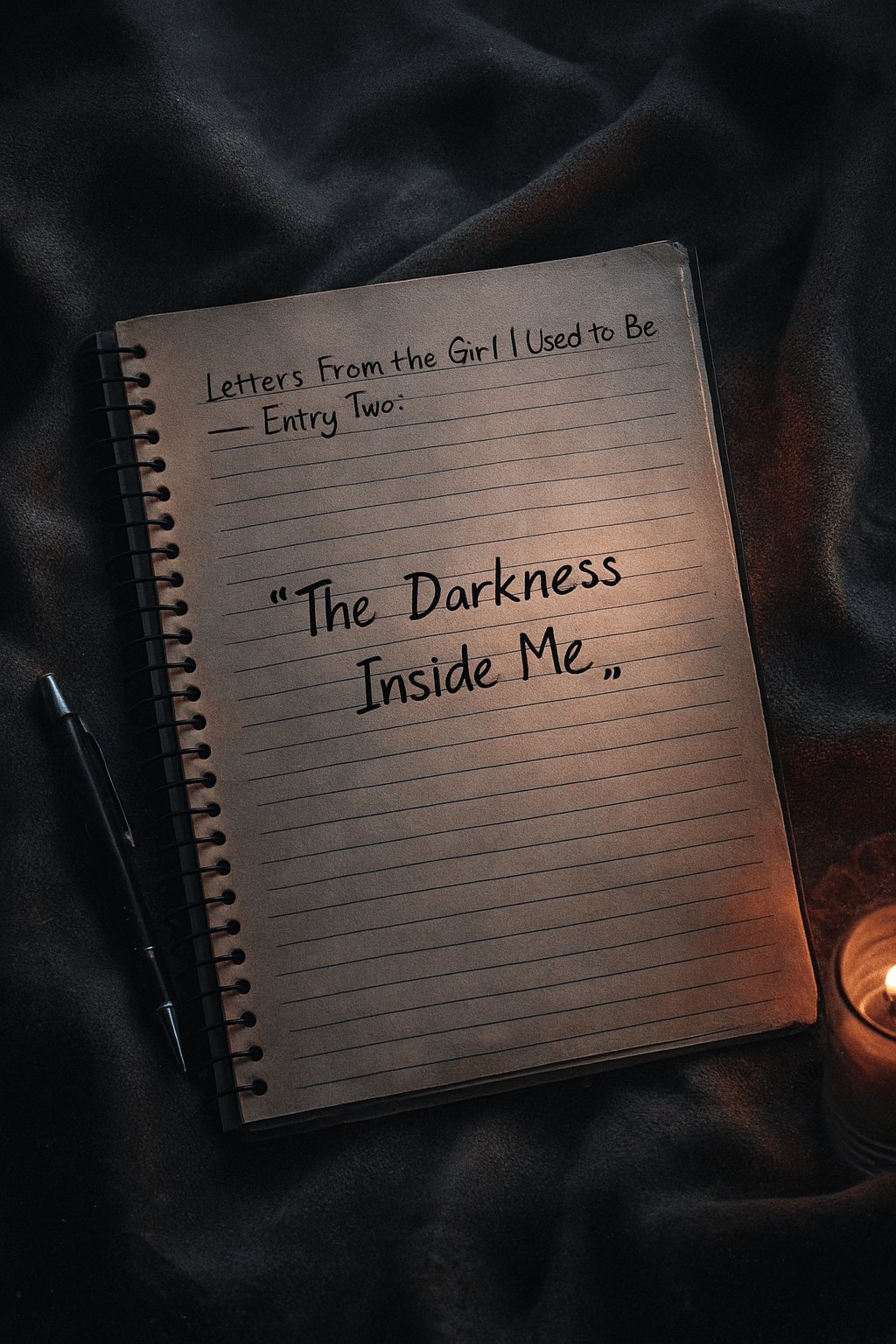
Letters From the Girl I Used to Be — Entry Two: “The Darkness Inside Me”

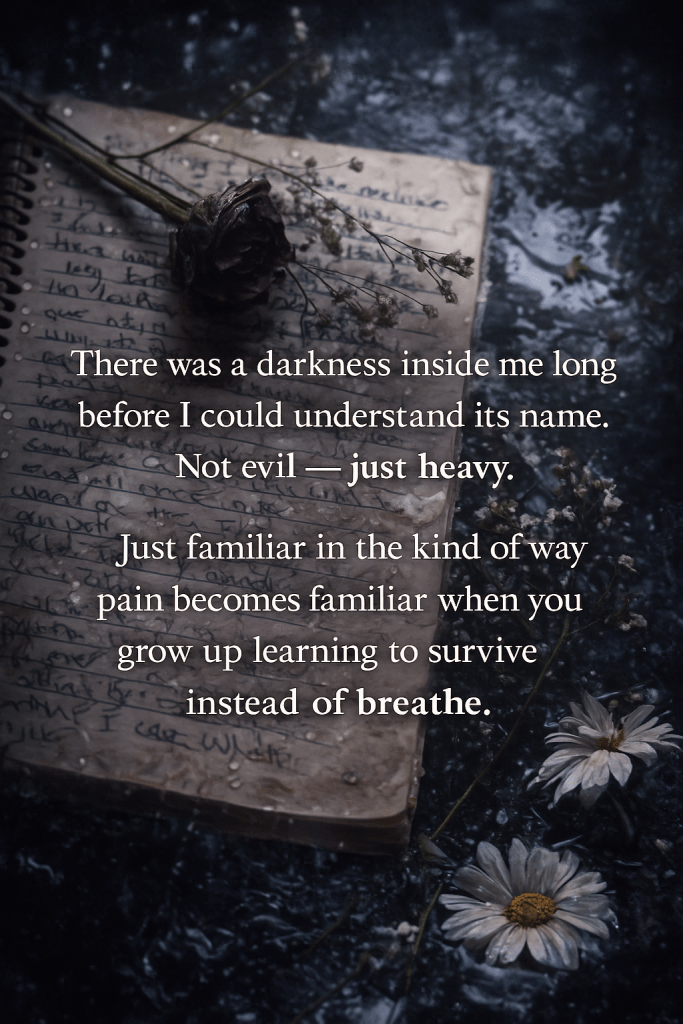
There was a darkness inside me long before I could understand its name.

Not evil — just heavy.

Just familiar in the kind of way pain becomes familiar when you grow up learning to survive instead of breathe.

I used to feel like everything simmered beneath the surface.

The anger.

The secrets.

The things from childhood I tried to bury so deep they’d never rise again.

But bruises don’t disappear just because you stop looking at them.

And memories don’t dissolve simply because you pretend they never happened.

Some days it felt like everything inside me wanted to erupt —

not to hurt anyone,

but to finally release what I’d held for too many years alone.

I built walls around myself thick enough to keep everyone at arm’s length.

Not because I didn’t want love,

but because I was afraid of being hurt

or worse—

abandoned.

The armor I wrapped around my heart kept the world out,

but it also kept me in.

Part of me believed that in order to save the woman I’d grow into,

I had to save the little girl inside me too.

I just didn’t know how to reach her yet.

I didn’t know how to tell her she wasn’t a burden.

I didn’t know how to show her she deserved softness.

I only knew the darkness was asking to be healed,

even when I didn’t feel ready to look it in the eye.

Reflection From Me Now

When I read this now, I don’t see a girl who was “too much.”

I see a child carrying a weight she had no tools to name.

That darkness wasn’t who I was —

it was everything I survived.

And every piece I thought made me “broken”

was really just a part of me waiting to be understood.

Healing didn’t start when the pain ended.

Healing started the moment I stopped being afraid

to look at the darkness

and call it mine.

Letters From the Girl I Used to Be — Entry One: “Broken”

There were days I felt like I was sinking under everything life kept throwing at me.

Like the darkness inside me was fighting to surface — sharp, heavy, filled with memories I was too young to carry.

Childhood pain clung to me in ways I didn’t understand.

It pressed against my chest, whispered in my thoughts, replayed moments I wanted to forget but couldn’t erase.

Depression didn’t feel like sadness.

It felt like being drained from the inside out — like something was pulling the light out of my lungs.

I kept waiting for the day I’d be able to breathe without thinking about how much it hurt.

Waiting for the walls I built to crack in the right places,

so someone could finally see the damage and help me heal it.

But every time I tried to let someone in,

every time I reached for connection,

something would trigger the little girl inside me.

The one who lived through hell

and still carried the scars.

I didn’t want to remember,

but the past seemed determined to follow me.

Some days I just wanted to feel numb —

anything to quiet the pain

and the memories

of everything I survived too young.

Reflection From Me Now

I look back at this entry and I want to hold that girl.

She wasn’t dramatic.

She wasn’t “too emotional.”

She was a child trying to carry the weight of wounds no child should have to make sense of.

She wrote in spirals because that’s how trauma feels — repetitive, overwhelming, tight around the throat.

She was trying to survive, not knowing she was already rebuilding.

And even then, she was writing her way out of the dark —

the first small steps toward the healing woman I am today.

Dark Christmas Romance — “Where the Warmth Found Us Anyway”

We didn’t plan to stop walking.

The night was cold enough to bite,

snow swirling like a restless dream,

but something softened between us—

a warmth that didn’t belong to the season at all.

He reached for my hand

in the simplest, quietest way,

like he’d been waiting for the right moment

instead of the perfect one.

His fingers brushed mine

and the rest of the world fell away—

the lights,

the cold,

the past trying to cling to our heels.

Sometimes warmth finds you

exactly where you thought you’d frozen over.

And sometimes,

you let it.

Dark Christmas Romance — “When He Spoke My Name Like a Promise”

Names sound different in December.

Maybe it’s the cold.

Maybe it’s the nostalgia woven into the season.

Or maybe it’s the person who gives the sound meaning.

He said mine like it belonged in his mouth—

soft, steady, pulled from someplace deep.

Not a question.

Not a warning.

A promise.

The kind that settles low in your chest

and lingers long after the words fade.

I looked up

and his eyes held that same quiet certainty—

the kind that made me feel seen,

wanted,

understood

in a way that didn’t scare me anymore.

There are moments you know you’re not walking away.

This was mine.

Dark Christmas Romance — “The Moment His Shadow Found Mine Again”

Sometimes it isn’t the touch that undoes you—

it’s the nearness.

The way his steps slowed beside mine,

boots carving twin paths through the snow.

The way the dim lights caught on his jaw,

sharp and softened all at once.

Our shadows brushed first,

sliding together like they remembered something

we hadn’t said out loud.

He didn’t speak.

He didn’t have to.

There are moments he reaches me

without lifting a hand—

pulling me back with nothing but presence,

nothing but the gravity we pretend not to feel.

In the dark,

under winter branches heavy with lights,

his shadow found mine again.

And I didn’t move away.

Dark Christmas Romance — “In the Quiet Between the Falling Snow”

There is a silence winter keeps for itself—

a hush that falls so gently

you almost believe the world has stopped breathing.

We stood inside that stillness,

snow drifting around us like a secret,

and for a moment

nothing existed except the space between us.

Not the past.

Not the hurt.

Not the hesitation we both pretended we didn’t carry.

Only the quiet.

Only the cold settling on our skin.

Only the way he looked at me

like he could hear every thought I’d tried to bury.

There are moments that rearrange you—

softly, quietly, completely.

This was one of mine.

The Rising

There is a moment, quiet but undeniable,

when you realize you are no longer piecing yourself together—

you are standing fully in who you’ve become.

Not half-formed,

not hesitant,

not waiting for permission to exist.

This is the rising.

It isn’t loud.

It isn’t dramatic.

It doesn’t come with a declaration or a sudden burst of clarity.

It comes in the softest way—

a knowing,

a settling,

a feeling in your bones that you are finally living from a place

that belongs to you.

You rise not because life became easier,

but because you became stronger—

not hardened,

not closed off,

but strong in that quiet way

that comes from surviving your own storms

and choosing to grow anyway.

Strength, for you, looks like softness.

Like trust.

Like letting someone close

without losing yourself in the process.

And he sees it—

the way you move differently now,

the way you meet the world with your whole heart

instead of the shell you learned to hide behind.

He doesn’t take credit for your rising.

He simply takes your hand,

like he always has,

and matches your step.

Not leading.

Not following.

Walking beside you

as you rise into the woman you fought to become.

You stand taller—

not because someone held you up,

but because you finally stopped folding yourself

into shapes that made you small.

You speak more clearly—

not to be heard,

but because your voice is no longer afraid

of its own truth.

You love more deeply—

not recklessly,

but with intention,

with awareness,

with the kind of devotion that comes

from knowing what it costs to be vulnerable

and choosing it anyway.

The rising is not about perfection.

It is about fullness—

living with your grief and your joy,

your darkness and your tenderness,

your strength and your soft edges

all at once.

It is the moment you look at your own reflection

and recognize the woman looking back—

wounded, yes;

changed, certainly;

but powerful in ways you once believed

were meant for other people.

You are not the fire you walked through.

You are not the silence you carried.

You are not the girl who disappeared

just to keep the peace.

You are the woman who rose

from all of it—

with a heart still open

and a love still worth offering.

This is the rising.

The becoming.

The truth of you.

And you are just getting started.

The Returning

There comes a moment, somewhere between letting go and letting in,

when you realize you are finally coming home to yourself.

Not the self you performed for the world.

Not the self you became out of survival.

But the self who has waited patiently inside you—

steady, quiet, whole.

This is the returning.

It doesn’t arrive with celebration.

It is subtle—

a shift in your breath,

a softening in your chest,

a sudden understanding that you don’t have to fight so hard

to exist in your own life anymore.

You feel it in the way you carry yourself—

not lighter,

but more rooted,

like you’ve stepped back into your own skin

after living on the edges of it for far too long.

He notices the change.

Not because you’re different,

but because you are more yourself than you’ve ever been.

Your laughter comes easier.

Your silences feel safer.

Your touch is no longer hesitant—

it’s intentional,

like you finally trust your own heart enough

to let it lead you somewhere tender.

He doesn’t guide your returning.

He simply walks beside it—

a constant presence,

a quiet witness,

a steady warmth that reminds you

you don’t have to disappear to be loved.

And slowly, you stop shrinking.

You stop apologizing for your depth.

You stop hiding your softness

as if it were something fragile

instead of something powerful.

You return to your body—

to the way it holds your history,

your desire,

your strength.

You return to your voice—

to the truth that trembles

and then steadies,

as if it always belonged here.

You return to your heart—

not innocent,

not untouched,

but wiser in its darkness

and braver in its light.

The returning is not about becoming new.

It is about becoming true—

the truest version of yourself,

shaped by everything you’ve endured

and everything you’ve learned to love again.

Here, in this quiet reclamation,

you understand something you never could before:

You are not returning to the past.

You are returning to the woman

the past was preparing you to become.

And she?

She is nothing short of extraordinary.

Design a site like this with WordPress.com
Get started