There’s something deeply attractive about intelligence weaponized.
Not cruelty.
Not arrogance.
But someone who observes everything and reveals nothing unless they choose to.
Books like this don’t just sell fantasy. They explore psychological tension. They examine how trauma shapes personality. They question whether broken people manipulate because they enjoy it — or because it’s how they survived.
That layer is what elevates dark romance beyond surface-level scandal.
Dark romance often plays with dominance, but what makes it compelling isn’t the power itself.
It’s the surrender.
Not forced surrender.
Chosen surrender.
The moment a character who prides themselves on control realizes they want to be seen — truly seen — is where the story shifts from power to vulnerability.
There’s something unsettling about a character who smiles while calculating. Who jokes while dismantling someone’s defenses. Who seems careless but is actually three moves ahead.
Ronan is not chaos because he lacks control. He is chaos because he understands control too well.
That kind of personality fascinates me.
The playful villain archetype isn’t dangerous because he’s loud. He’s dangerous because you underestimate him. You mistake charm for softness. You mistake wit for safety.
I got busy surviving the days I don’t usually write about.
Caregiving doesn’t pause when your body hurts. Motherhood doesn’t wait for clarity. Healing doesn’t ask if you’re rested enough to continue. And writing — the thing that keeps me anchored — often has to happen in the margins when everything else has been handled first.
The last while has been full. Loud. Messy. Real.
And somewhere in the middle of regulating children, managing pain, holding space for other people’s needs, and keeping the household moving, my words went quiet — not because they were gone, but because they were still forming.
I’m learning that my voice doesn’t disappear when I’m overwhelmed.
It evolves.
This space has always been about honesty. About healing that isn’t polished or performative. About books, trauma, desire, exhaustion, and the strange ways we learn to live with what shaped us. That hasn’t changed — if anything, it’s deepened.
I’m coming back to writing intentionally. Not to chase algorithms or soften my edges, but to tell the truth as it exists right now. To write in the dark spaces and the tender ones. To let stories breathe without rushing them into something marketable or neat.
I’ve also opened a way for readers who resonate with this work to support it directly. Writing takes time, energy, and care — and if my words have ever helped you feel seen, steadied, or understood, that support helps me keep going.
No pressure. No obligation.
Just presence.
Thank you for staying.
Thank you for finding your way back.
I’m here — and the words are coming with me.
If you’d like to support my writing, you can find that here:
I didn’t stop writing because I had nothing to say.
I stopped because life demanded to be lived louder than words for a while.
Healing isn’t always poetic. Sometimes it’s repetitive. Sometimes it’s exhausting. Sometimes it’s quiet in a way that leaves no room for reflection, only survival. And I’ve learned that forcing myself to create in those moments only fractures the truth I’m trying to honor.
This space has never been about consistency for the sake of visibility. It’s about honesty. And the truth is, healing doesn’t move in straight lines or neat schedules. It moves in waves — some gentle, some relentless — and sometimes you have to let them pass through your body before you can name them.
I’m still here. Still learning. Still unlearning. Still choosing depth over performance. Still finding meaning in the places that aren’t easy to look at.
This isn’t a restart.
It’s a continuation.
And if you’re still here too, welcome back — we’ll take it slowly, truthfully, and without pretending we were ever meant to rush.
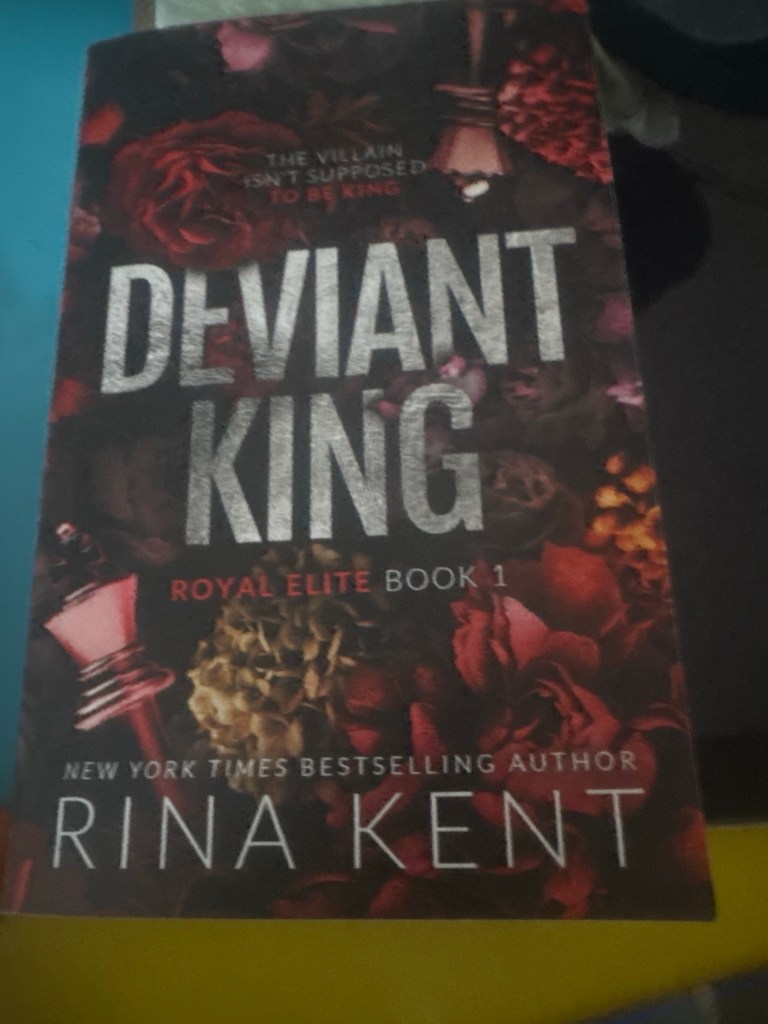
As I move through books like Deviant King, I stay aware of how the intensity builds — not just in the story, but in me.
I notice when my body tenses. When it doesn’t. When a scene feels grounding instead of overwhelming. That awareness is something I didn’t always have, and I don’t take it lightly.
Reading dark material now feels intentional.
I choose when to engage. I choose when to pause. I choose how much I carry forward.
It gives language to emotions people are rarely allowed to speak aloud — desire mixed with fear, safety intertwined with intensity, connection that doesn’t arrive clean or polite. These stories don’t exist to normalize danger. They exist to explore contradiction.
When I read them, I’m not looking to replicate anything. I’m looking to understand why these narratives resonate so deeply for so many people — especially those who’ve learned survival before softness.
Power in fiction doesn’t operate the same way power does in reality.
On the page, it’s contained. Framed. Bound by narrative and choice.
That distinction matters to me now.
When I read stories that explore dominance, control, or imbalance, I’m not looking for instruction or fantasy fulfillment. I’m watching how those dynamics are constructed — where they hold, where they fracture, where they reveal vulnerability beneath authority.
Books allow me to examine power without surrendering to it.
They let me see it clearly, from the outside, where my autonomy remains intact.
Not because they were graphic, but because they mirrored things I didn’t yet have distance from. Power, control, obsession — all of it landed too close to the body.
That closeness has changed.
Now, when I read darker narratives, I don’t feel pulled under. I feel steady. I can observe what’s happening without internalizing it. I can acknowledge the tension without mistaking it for threat.
Healing didn’t remove my interest in darkness.
It taught me how to stand beside it without being swallowed.
You don’t have to choose between honoring your trauma and honoring your desire. You don’t have to sanitize your healing to make it understandable to others.
You are allowed to hold the full truth of your experience — the pain, the curiosity, the boundaries, the growth — without turning it into a lesson or a warning.
Healing isn’t about arriving somewhere clean.
It’s about learning how to live honestly inside what remains.
Stories that explore power, desire, and darkness don’t exist because people want to be harmed. They exist because people want language for complexity.
Dark romance, taboo narratives, and emotionally intense stories give form to experiences that don’t fit neatly into polite conversation. They allow exploration without enactment, reflection without exposure.
These stories aren’t instructions.
They’re mirrors.
They let readers recognize parts of themselves — the parts shaped by history, curiosity, fear, and longing — without demanding explanation or justification.
Sometimes the safest way to look at something difficult
Choosing sensation — whether emotional, physical, or relational — is a way of reclaiming ownership of the body and its responses. It’s saying, I get to decide what this means now.
This isn’t about recreating the past. It’s about rewriting the context. What was once taken can later be chosen — carefully, consciously, and with boundaries that didn’t exist before.
Pleasure doesn’t erase pain.
It exists beside it — proof that the body is still capable of response, curiosity, and connection.
That isn’t weakness.
It’s survival that learned how to speak differently.
There’s a tendency to collapse intensity and harm into the same category — especially when trauma is involved. But they are not the same thing.
Harm removes choice.
Intensity does not.
Intensity can be slow or sharp, quiet or overwhelming — but when it is chosen, it exists within consent and awareness. Trauma teaches the body to fear intensity because it once meant danger. Healing allows space to question that association without forcing a conclusion.
Not everything that feels strong is unsafe.
And not everything that feels calm is healing.
Learning the difference takes time, patience, and self-trust — not judgment.
There was a time when I read to disappear into a story.
Intensity pulled me under, and I let it. I didn’t know how to stay separate from what I was consuming, so everything landed harder than it needed to.
That has changed.
Now, when I read books like Deviant King, I stay aware of where I am in relation to the story. I notice the tension without surrendering to it. I watch power dynamics unfold without imagining myself inside them. I remain present — anchored — even when the narrative sharpens.
That distance isn’t detachment.
It’s discernment.
Reading has become a practice of choice. I decide how close I want to sit to the darkness. I decide when to pause. I decide when a chapter is enough for one day. The story doesn’t get to decide that for me anymore.
And that, more than anything, is why books feel supportive instead of consuming now.
They offer intensity without demand — and I get to remain myself the entire time.
Books have become one of the safest places for me to explore intensity.
They offer structure — beginnings, endings, pauses — without requiring anything in return.
Unlike real life, nothing spills beyond the page. Power stays contained. Conflict resolves or doesn’t, but always within the boundaries of story. I’m not asked to participate, explain, or endure. I’m only asked to witness.
That witnessing has taught me something important: not every strong feeling needs action. Some only need acknowledgment. Reading allows me to sit with complexity without letting it attach itself to my body or my choices.
They show me where my boundaries are solid and where they’ve softened. They show me what I can hold without absorbing. They show me that curiosity doesn’t equal danger when choice is present.
I don’t read these stories to feel consumed. I read them to understand why certain themes once felt destabilizing — and why they don’t anymore. Healing didn’t remove my interest in complexity. It taught me how to engage with it consciously.
Darkness on the page doesn’t threaten me.
It exists within limits, shaped by narrative, and closed when I decide I’m done for the day.
That sense of control matters more than the story itself.
Some books hold intensity in a way that doesn’t overwhelm me anymore.
They don’t pull me forward recklessly or demand emotional urgency. Instead, they ask me to stay present — to notice what’s happening without needing to respond to it.
As I read, I pay attention to how my body reacts before my thoughts catch up. Whether something tightens, relaxes, or simply stays neutral tells me more than excitement ever could. That awareness didn’t come naturally. It came from learning how to sit with strong themes without letting them take control.
Reading like this feels grounded.
The story can explore power, tension, and darkness while I remain firmly myself — observant, contained, and free to pause whenever I choose.
That distance is what makes reading feel safe now.
It doesn’t ask you to define yourself by what you want or don’t want next.
It simply allows room for complexity.
You can honor the pain that shaped you and still choose experiences that feel different now. One does not erase the other. They coexist — quietly, honestly, without explanation.
Healing is not about proving you’re “better.”
It’s about trusting yourself enough to choose — and to stop when you need to.
One of the quiet lies trauma teaches is that desire is dangerous — or worse, inappropriate. That wanting anything more than survival somehow dishonors the pain that came before.
But desire after trauma isn’t betrayal.
It’s information.
It speaks to the part of you that survived long enough to want again. To feel curiosity. To imagine pleasure, closeness, or intensity without it being taken from you.
Wanting does not mean you have forgotten what happened.
It means you are no longer willing to let the past decide everything for you.
The body remembers long after the mind has made sense of things.
Even when you understand your trauma intellectually, the nervous system may still react as if danger is present.
Healing doesn’t rush that process.
Safety isn’t something the body believes just because it’s told to. It’s learned through consistency, boundaries, and being witnessed without being pushed. Sometimes that learning happens alone. Sometimes it happens with the right person — someone who respects pauses, listens to signals, and never mistakes vulnerability for access.
Trauma is not defined only by what happened — it’s defined by the loss of choice that came with it.
When autonomy is taken, the body learns to brace, to anticipate, to survive without consent being part of the equation.
Healing doesn’t erase that memory. What it can do is reintroduce choice slowly, intentionally, and on your own terms. Choice changes the meaning of intensity. It transforms what once felt imposed into something that can be engaged with consciously — or declined entirely.
There is a difference between being controlled and choosing.
And that difference matters more than anything else.
Reclamation doesn’t come from repeating the past.
It comes from deciding, this time, I choose.
I don’t read to escape myself. I read to stay grounded while complexity exists.
When a book explores darkness, I don’t see it as endorsement or instruction. I see it as observation. As a way of understanding how power, vulnerability, and desire intersect — without needing to live it out loud.
That’s why I return to reading again and again.
Not for answers, but for clarity.
Books don’t heal me.
They give me language — and sometimes that’s enough.
Fiction gives me structure. A beginning and an end. A space where power, desire, and conflict are contained — not spilling into real life, not asking anything from my body or my choices.
Books let me explore complexity without consequence. I can notice what resonates and what doesn’t. I can stay curious without being pulled forward by momentum.
That boundary matters.
It’s one of the ways reading supports my healing instead of overwhelming it.
They hold intensity without asking me to react to it.
As I read Deviant King, I notice how my body responds before my thoughts do. Not excitement. Not fear. Awareness. A quiet recognition of power dynamics, restraint, and choice unfolding on the page.
Reading like this isn’t about losing myself.
It’s about staying present while something sharp exists nearby — and knowing I can turn the page, pause, or stop whenever I choose.
That awareness is part of why books feel safe to me now.
They let me sit with intensity without surrendering control.
When I return to old poems, I notice how much has shifted.
The emotions are familiar, but the urgency is gone. Where there was once desperation, there is now clarity. Where there was confusion, there is context.
Healing didn’t silence those feelings.
It taught me how to speak about them without bleeding onto the page.
These words were written by a version of me who didn’t yet know what I know now.
She wrote from instinct, from pain she couldn’t name, from feelings she hadn’t learned how to carry safely. I don’t rewrite her to correct her — I rewrite her to understand her.
There was truth in those lines, even if the language was sharp.
There was honesty, even if it hurt to read.
This isn’t about erasing who I was.
It’s about meeting her with more care than she had back then.
I didn’t choose winter, and I don’t pretend to enjoy it.
But I’m here anyway.
Healing sometimes looks like acknowledging that certain seasons are about survival, not transformation. About doing what’s necessary to get through without turning against yourself in the process.
Winter has taught me what waiting actually looks like.
Not resting.
Not collapsing.
Just existing in between.
Some seasons don’t offer momentum or clarity. They offer stillness — not the peaceful kind, but the kind that forces you to sit with yourself longer than you’d like. Healing here isn’t about progress. It’s about endurance without self-betrayal.
It doesn’t feel cozy to me — it feels heavy. Confining. Like everything is paused without asking whether I’m ready to stop.
Winter strips things down in a way that feels uncomfortable. The days are shorter, the air is colder, and there’s less room to escape inward feelings. Healing in this season doesn’t feel gentle. It feels slow. Reluctant. Sometimes resentful.
But I’m learning that healing doesn’t require me to like the season I’m in.
It only asks that I move through it honestly.
I don’t read the dark to become it. I read it to understand myself.
The stories I read reflect the complexity of my inner world — not something broken, but something honest. They allow me to explore emotions that don’t fit neatly into polite conversation or easy categories.
Healing doesn’t require me to choose light over dark.
It requires me to understand both.
And reading has become one of the places where I do that most safely — one chapter at a time.
My mission isn’t to be polished, palatable, or easy to consume. It’s to be honest — even when honesty makes people uncomfortable. Especially then. I write from the places that don’t heal neatly, from the parts of life that don’t fit into inspirational quotes or clean conclusions. Because that’s where real people live.
My mission is to show that healing can coexist with darkness. That growth doesn’t require pretending pain didn’t shape you. That love, family, desire, trauma, and survival can all exist in the same body without canceling each other out. I refuse to sugarcoat what it takes to keep going — especially when you’re carrying others while learning how to carry yourself.
I write for the people who have learned to breathe through scars. For those who find solace in books, in quiet moments, in intensity, and in stories that mirror what they’ve never been allowed to say out loud. I write for the ones who were told to soften, to forgive faster, to move on — and didn’t.
At the core of everything, my mission is simple:
to live truthfully, love fiercely, protect my family, and leave space for others to recognize themselves in my words.
There’s a difference between indulging in fantasy and reading with awareness.
I know where the line is now. I know what belongs on the page and what doesn’t belong in my real life. That clarity didn’t come from avoiding dark stories — it came from engaging with them consciously.
Books give me a safe distance. A place to observe power, desire, and vulnerability without surrendering my agency. I can sit with the discomfort, learn from it, and close the book when I’ve had enough.
Some stories feel familiar in ways that are difficult to explain.
Not because I’ve lived them exactly — but because I recognize the emotional landscape. Control. Longing. Obsession. The pull toward intensity when calm once felt unsafe. Books like this don’t shock me. They remind me.
I don’t read darkness to romanticize it. I read it to understand why certain dynamics feel grounding instead of frightening. Why tension feels steady. Why devotion, even when complicated, feels like relief.
Healing hasn’t erased those questions.
It’s given me the space to ask them without shame.
For a long time, I believed growth had to feel uncomfortable to be real.
If I wasn’t questioning everything, pushing myself, or emotionally exhausted, I assumed I was stagnant. But lately, I’ve realized that stability can also be a sign of healing — especially after chaos.
Feeling calm doesn’t mean I’ve stopped evolving.
It means my nervous system finally trusts the ground beneath me.
And that kind of growth deserves just as much respect.
What are your thoughts on the concept of living a very long life?
The idea of living a very long life doesn’t scare me, but it also doesn’t comfort me the way it seems to for others. Time, on its own, doesn’t mean much. It’s what fills the time that determines whether a long life feels like a gift or a quiet sentence. I don’t measure life by years lived, but by moments that actually felt like living.
A long life only feels appealing if it allows room for growth, rest, and change. I’ve already learned that survival can stretch time into something heavy and exhausting. Existing for the sake of existing isn’t enough. I want years that soften me, not ones that demand I harden just to endure them.
I think I care less about how long life lasts and more about whether I’m allowed to live honestly within it. To feel deeply. To heal in layers. To love without pretending it doesn’t hurt sometimes. If a long life gives me space for that, then I welcome it. If it doesn’t, I’d rather live fewer years fully awake than many years on autopilot.
In the end, I don’t wish for a long life. I wish for a true one.
There was a time when I carried everything — everyone else’s emotions, expectations, disappointments — as if they were my responsibility.
Healing has slowly taught me how to set those things down.
Not with anger. Not with resentment. Just with awareness. I’ve started to notice what actually belongs to me and what never did. What I can influence and what I can simply release.
Some days it looks like doing the ordinary things without spiraling. Like responding instead of reacting. Like noticing when something doesn’t trigger me the way it used to — and quietly acknowledging that change without needing to celebrate it.
I’ve learned that this kind of healing rarely feels dramatic. There’s no moment where everything suddenly makes sense. It’s subtle. Almost easy to miss. But it’s real.
The work that doesn’t announce itself is often the work that lasts.
I’ve noticed that my reading choices often reflect where I am emotionally — sometimes before I even realize it.
When I’m drawn to darker stories, it usually means I’m ready to look at things I once avoided. When I lean toward emotional intensity, it’s often because I’m processing something beneath the surface. Books don’t create those feelings — they reveal them.
That awareness has changed how I read. I no longer judge my preferences. I pay attention to them. They’re information, not flaws.
I could stop treating healing like a finish line and start honoring it as something that breathes, pauses, and changes shape. I’ve spent years asking myself to be “better,” “over it,” or “stronger,” without always asking whether I was being gentle with the parts of me still learning how to feel safe.
I could allow myself to sit with discomfort without immediately trying to analyze or transform it. Not every feeling needs meaning right away. Some just need space. Some need silence. Some need a chapter break before the next page can be turned.
I could trust my intuition more instead of second-guessing it. The part of me that knows when to rest, when to read, when to write, and when to pull back has always been there. Doing things differently might simply mean listening sooner instead of pushing past myself out of habit.
And maybe the biggest difference would be this: letting my healing be honest, even when it’s dark, even when it’s complicated, even when it doesn’t look like what people expect. I don’t need to soften my truth to make it easier to digest. The right people will recognize themselves in it exactly as it is.
Fiction has always given me a place to feel things without consequence.
Through characters, I can sit with power, obsession, fear, devotion — all the things that are complicated in real life. I can examine them slowly, thoughtfully, without judgment. That distance matters. It keeps the exploration intentional instead of overwhelming.
There’s something healing about knowing I can close the book whenever I need to. That I’m in control of the pace. That nothing is demanded of me beyond presence.
Reading doesn’t overwhelm me.
It contains the intensity in a way my body understands.
They linger — not because they were shocking or dramatic, but because they touched something familiar.
When that happens, I know the story wasn’t just entertainment. It was a mirror. It reflected parts of me I may not talk about openly — the hunger for understanding, the pull toward intensity, the desire to feel deeply in a world that often asks for restraint.
I don’t read these stories to glorify darkness.
I read them to understand it. To explore it safely. To name the emotions without having to live them out loud.
But escape feels frantic. Rest feels grounded. And when I read now, it’s not about disappearing — it’s about settling. My thoughts slow. My breathing evens out. The noise fades without me forcing it.
That’s not avoidance.
That’s regulation.
Healing has taught me that rest doesn’t need to be earned. It doesn’t need to be productive. It simply needs to be allowed. And books have become one of the safest places for me to practice that.
I gravitate toward stories that reflect where I am emotionally — or where I’m heading.
When I’m drawn to darker narratives, it’s not because I’m broken. It’s because I’m curious. Because I want to understand power, resilience, survival, and desire in controlled environments. Fiction lets me explore intensity without being consumed by it.
There is healing in seeing difficult themes handled with intention. In recognizing yourself in flawed characters. In realizing you’re not alone in the questions you carry.
If you had a freeway billboard, what would it say?
If I had a freeway billboard, it wouldn’t be loud.
It wouldn’t try to sell anything.
It would simply say:
“You don’t have to be healed to be worthy.”
Because so many of us are moving through life carrying invisible weight — showing up for work, for family, for others — while quietly wondering if we’re allowed to take up space exactly as we are. Still learning. Still unraveling. Still healing.
That billboard would be for the ones who feel behind.
For the ones who think rest is something they have to earn.
For the ones who learned survival before softness and are only now discovering that gentleness can exist without danger.
And maybe, just for a moment while passing by, someone would read it and exhale — realizing they don’t need to fix themselves before they’re allowed to exist fully in this world.
The darker curiosities. The complicated emotions. The desire to explore things safely through fiction before I ever try to name them in real life.
Books give me that space.
Through characters, I can sit with power, fear, longing, and vulnerability without having to justify it. I can observe instead of participate. I can feel without being exposed. And in that process, I learn more about where my boundaries actually live.
Healing doesn’t mean erasing the darker parts of yourself.
Sometimes it means understanding them well enough not to be controlled by them.



















 Reading Trauma Mama: Velvet & Taboo